Recognition Without Recognition? The TRNC’s Strategy of Visibility, Performance, and Structural Integration
The Turkish Republic of Northern Cyprus (TRNC) represents one of the longest-running examples of non-recognition in contemporary international politics. Since its unilateral declaration of independence in 1983, it has been diplomatically isolated, recognized only by Turkey, and confined within the framework of international law established by United Nations Security Council Resolutions (541 and 550). Nevertheless, due to developments, especially under Ersin Tatar’s presidency in 2020-25, and the evolution of regional dynamics have revived speculation about whether the TRNC is actively pursuing international recognition. At first glance, the answer is straightforward. Official discourse constantly emphasises the necessity for sovereign equality, a two-state solution, and international recognition. Engagement with regional organisations, such as the Organization of Turkic States (OTS), has increased visibility in international forums. A diplomatic push could be seen in the expanding ties with countries like Pakistan and Azerbaijan. Yet a closer look reveals a more complex reality. Recognition functions as an official narrative, a bargaining tool and a controlled form of international visibility within a system that institutionalize a policy of non-recognition. Thus, the TRNC does not pursue recognition as a structured, systematic diplomatic strategy. TRNC’s efforts to find recognition has become an attempt of managing status under structural restraints rather than a direct path to recognition.
Quest for recognition of the TRNC: the strategic ambiguity
The perception that the TRNC is actively seeking recognition stems largely from its rhetorical shift toward a two-state solution, particularly during Ersin Tatar’s presidency. This shift marked a departure from a previous federalist framework (bi-communal, bi-zonal federation – BBF) associated with UN-led negotiations. The insistence on sovereign equality and separate statehood appears, at least discursively, compatible with a recognition-focused agenda. However, the empirical record tells a different story. Despite an increase in diplomatic activity, high-level visits, participation in international meetings, and more assertive public statements, there is little evidence of a coordinated, long-term strategy aimed at securing recognition. There are no sustained lobbying campaigns, targeted diplomatic coalitions, or a structured roadmap identifying potential recognizing states and pathways to formal recognition. Instead, we observe a model of symbolic diplomacy including gestures that increase visibility without fundamentally changing legal or diplomatic status. In this context, recognition functions more as a rhetorical endpoint than an operational policy objective.
The increasing engagement of the TRNC with multilateral platforms, particularly the Organization of Turkic States (OTS) has been considered as one of the most substantial developments. The admission of the TRNC as an observer member in 2022 was widely illustrated as a diplomatic success. This allowed the TRNC to participate in meetings under its official name, host events, and engage with member states in a semi-institutionalized environment reflecting a form of functional engagement within regional institutional frameworks. It functions as an arena for “de facto recognition.” Similarly, relations with Azerbaijan have intensified as President Ilham Aliyev has become the most proactive ally. In April 2024, a “Friendship Group” was established between the Azerbaijani National Assembly and the TRNC Republican Assembly. The OTS Council of Elders was held its 17th meeting in the TRNC on May 1-2, 2025, which was considered as a move designed to “normalize” the TRNC as a legitimate host for international bodies. The TRNC was included as an observer at an OTS Energy Ministers meetings too, signalling that Turkic states are beginning to include the TRNC in regional infrastructure planning, which creates a level of functional integration typically associated with sovereign statehood.
A major shift is the evolution of the “Two States, One Nation” (Turkey-Azerbaijan) slogan into One Nation, Three States, explicitly including the TRNC, which can be interpreted as a sign of de facto recognition. In January 2026, the TRNC President received the Azerbaijan-Cyprus Friendship Society to discuss official labour and cultural activities. The establishment of a “Friendship Group” in the Azerbaijani Parliament has now set a pattern where the TRNC is actively working to implement this model in other Turkic states including Kazakhstan and Kyrgyzstan. Lately, Azerbaijan hosted the TRNC Prime Minister for high-level government meetings in Baku on April 1-2, 2026, demonstrating a move toward institutionalized, if not yet legal, recognition.
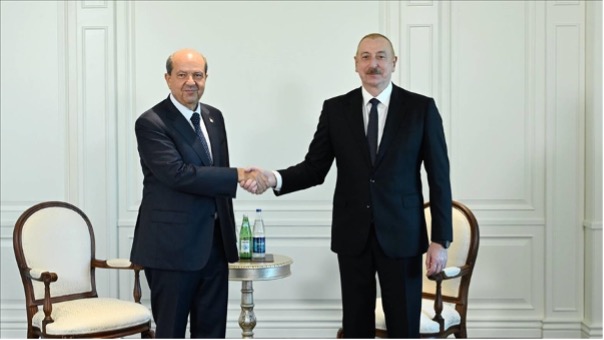
Image: Ersin Tatar meeting Ilham Aliyev during high-level diplomatic engagements in Azerbaijan, including summits linked to the OTS (Source: Anadolu Agency photo archives)
This situation is not limited to the Turkic world. The TRNC participates in the Organisation of Islamic Cooperation (OIC) as an observer under the designation “Turkish Cypriot State,” a designation dating back to the Annan Plan era that enables engagement without implying formal recognition. Within this institutional framing, the TRNC has developed bilateral relations with countries such as Pakistan, Bangladesh, and Gambia where Turkey has substantial economic or military influence. In August 2023, Memorandum of Understanding on higher education was signed with Pakistan which was considered as an important step in building soft institutional ties. The TRNC diplomats meet frequently with representatives from Bangladesh and West Africa on the sidelines of the UN General Assembly. Rather than explicitly seeking recognition, these engagements largely focus on practical issues including education, trade, transportation and representation. Delegates from TRNC regularly attend the Standing Committee for Economic and Commercial Cooperation of the Organisation of Islamic Cooperation (COMCEC) meetings in Istanbul. For instance, the TRNC used this platform to lobby for exemptions on its goods and for direct trade link, framing it as a “humanitarian necessity” to end their economic isolation.
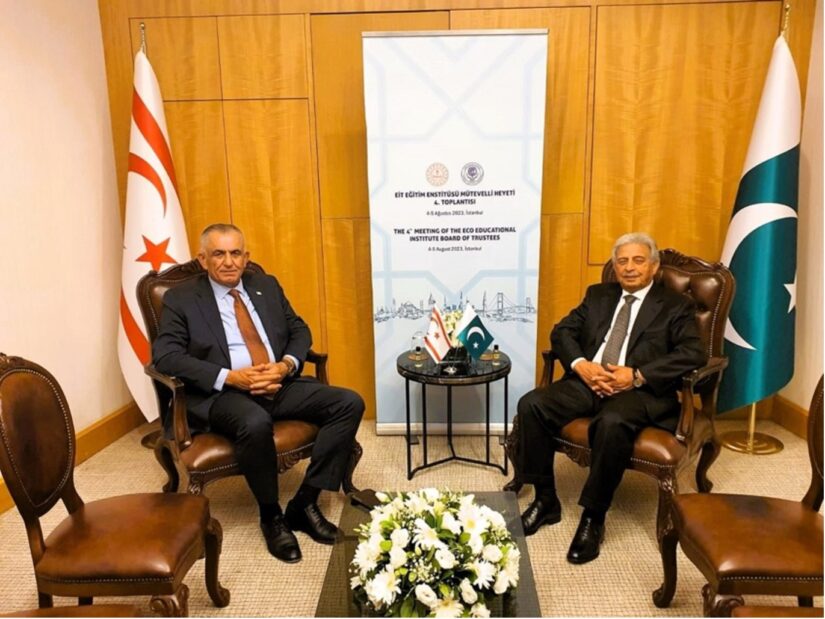
Image: MoU on higher education agreed between TRNC and Pakistan (Source: Cyprus Mail, 05/08/2023)
The TRNC’s engagement with multilateral organizations, however, illustrates the limits of its recognition efforts. These engagements are often interpreted as steps toward broader international acceptance. The literature on “engagement without recognition” (EWR) frameworks highlights how international actors can interact with de facto states in functional and technical domains – trade, mobility, cultural exchange – without conferring formal recognition. In this context, participation in multilateral forums does not necessarily indicate progress toward recognition but may instead reflect the institutionalization of non-recognition. These platforms enable limited engagement while simultaneously reinforcing the legal and diplomatic boundaries that exclude the TRNC from full sovereign status. Platforms like the OTS and the OIC function as areas of controlled visibility. They allow the TRNC to appear as a state-like actor, interact with recognized states, and develop a degree of legitimacy. However, they also reinforce the boundaries of non-recognition. The ‘Turkic’ strategy for securing recognition of the TRNC’s statehood faces certain limitations. During the EU–Central Asia summit in April 2025 Kazakhstan, Uzbekistan, and Turkmenistan reaffirmed their support for two UN Security Council resolutions declaring all secessionist actions, and the TRNC’s declaration of independence, to be illegal. Ankara did not respond to these statements, and the TRNC’s continued presence in Turkic integration formatswas maintained. Participation does not translate into a legal status transformation; rather, it institutionalizes a form of partial engagement within a system that continues to exclude. Consequently, interaction itself becomes an end in itself: a means of maintaining visibility, building networks, and signalling legitimacy without waiting for formal diplomatic breakthroughs.
Internal fragmentation: a three-headed strategy
Understanding the external behaviour of the TRNC requires a focus on its internal political dynamics. Far from being a unified actor, the TRNC operates through a fragmented structure that can be described as a “three-headed system”: the presidency, the Ministry of Foreign Affairs (MFA), and the government. These three components do not always align. Instead, they pursue overlapping but not identical objectives. This fragmentation contributes to the ambiguity of the TRNC’s external behaviour, reinforcing the gap between discourse and practice.
The presidency under Tufan Erhürman represents a more conciliatory and negotiation-oriented approach today. Winning nearly 63% of the vote in 2025, he decisively unseated the pro-recognition incumbent, Ersin Tatar. As the leader of the CTP who argued that the two-state policy led Turkish Cypriots to the deepest international isolation in decades, Erhürman campaigned on reviving UN-backed negotiations for a bi-zonal, bi-communal federation. However, the election of Tufan Erhürman has created a unique “dual administration” within TRNC. On one hand, the presidency is held by a leader who secured a landslide mandate to revive federalist negotiations; on the other, the executive government and the MFA remain largely staffed by “two-state” hardliners, backed by the immutable strategic doctrine of Turkey. The UN is engaging with a president who wants a dialogue, while the surrounding security and diplomatic apparatus, including the MFA and Turkey, refuses to participate in any negotiations unless the setting reflects the formal recognition of two sovereign states.
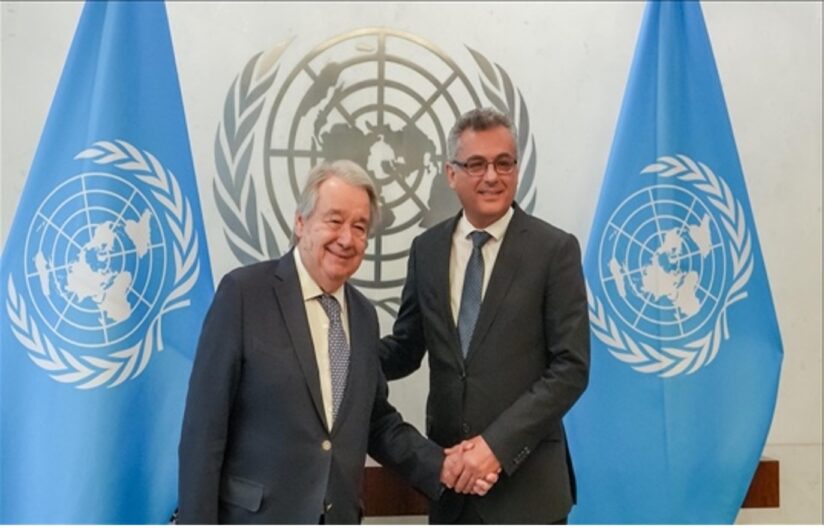
Image: UN Secretary-General António Guterres meets with pro-unification leader Tufan Erhürman, who supports a federal solution (Source: TRNC Presidency).
Tufan Erhürman faces significant institutional check stemming from the current government structure. He has authority to conduct the Cyprus negotiations. He emphasizes the importance of technical committees and confidence-building measures (CBMs). Despite the change in the presidency, the MFA, under the leadership of Tahsin Ertuğruloğlu, continues to make strong hardline statements. In January 2026, the MFA officially rejected the UN’s mandate renewal in the absence of TRNC, reiterating its demand for a “two-state” Status of Forces Agreement, a move that directly complicates pro-settlement message of Erhürman.
Foreign Minister Tahsin Ertuğruloğlu remains a leading advocate of the “two-state solution” doctrine. Even under Erhürman, he has publicly characterised federalism as an outdated nostalgia and a waste of time. However, Erhürmanhas stated that any steps toward peace must be in consultation with Turkey. The president of Turkey Recep Tayyip Erdoğan argued that federation was exhausted and that Turkey would not compromise on the two-state reality in his 2026 briefings. While previous periods focused on CBMs, the MFA now prioritizes foreign diplomatic initiatives, particularly in the Turkic and Islamic world. At the same time, Erhürman needs to satisfy a domestic public that voted for a European future while navigating a Turkish state that has already built the infrastructure for permanent separation.
While the MFA acts as the ideological “enforcer” of the two-state policy, the government is the “implementation machine” that binds the TRNC to Turkey via protocols. The government translates broader strategic orientations into actual practices through economic agreements, infrastructural projects and regulatory frameworks. Government, led by Prime Minister Ünal Üstel (UBP), is the body that handles the budget and the actual integration with Turkey. Unlike the president, the government remains a right-wing coalition that explicitly rejects Erhürman’s federalist mandate. The Prime Minister stated in January 2026 that “the only realistic and sustainable solution” is a cooperation-based model between two separate states.
The government’s role is to make the TRNC a “functional reality” via financial protocols, digital monopolies pushing through the Turk Telekom deal to ensure the TRNC’s digital life is dependent on Turkey until 2051. The government uses Parliamentary Resolutions (like the one passed in October 2025 approving the two-state model) and Erhürman, in response, is using his judicial powers to refer government deals (like the telecom and electricity protocols) to the Supreme Court, arguing they violate TRNC sovereignty. The opposition parties and civil society organisations demonstrate that there is a need to stop the government making the TRNC a province of Turkey. They state that Turkey now is further trying to limit or remove the capacity of the judiciary. Interior minister of TRNC and Turkey’s Justice Minister have discussed establishing a Ministry of Justice in TRNC which has been considered and framed as encroachment on judicial independence to eliminate the role of courts and its legal oversight.
Turkey and structural integration
Any analysis of external engagement of the TRNC must highlight the role of Turkey. As the sole recognizing state and its patron, Turkey shapes the parameters by which the TRNC operates. This influence extends beyond diplomatic support to include economic, infrastructural, and institutional integration. Recent developments indicate a deepening of this integration. The Economic and Financial Cooperation Protocols are repeatedly questioned by civil society organisations and opposition parties as a tool for Turkey to exerts its governing influence. These protocols are viewednot merely as providing financial aid but as conditional frameworks that shape domestic policy choices, particularly in areas such as privatisation, public sector reform, and fiscal management.
Infrastructure projects, particularly in the telecommunications and energy industries, are seen as mechanisms that establish long-term structural dependency. Civil society actors frequently claim that such projects reduce the capacity of TRNC and its autonomous decision-making by incorporating important sectors into systems controlled or linked to Turkey. The concern is political as well as economic. Controlling infrastructure is described as influencing regulatory frameworks, market access and information flows. Expanding digital infrastructure agreements has been a particularly contentious issue. Unions and opposition parties have characterised these initiatives as attempts to externalize governance authority, arguing that control over telecommunications networks could evolve into broader forms of administrative and regulatory oversight.
More generally, these developments are often described by critics as contributing to a process of “structural deadlock,” in which the TRNC is becoming increasingly integrated into Turkey’s economic and institutional networks to the point of limiting its future autonomy. From this perspective, the problem is not an immediate loss of sovereignty, but a gradual erosion of decision-making capacity over time. This framework has fuelled opposition discourse that characterizes the relationship with Turkey not merely as patronage, but as a shift toward asymmetric interdependence where the cost of separation is excessively high. This raises a crucial question: Is the aim recognition or functional integration? While official discourse continues to emphasize sovereign equality and statehood, the material reality shows a parallel process in which the TRNC is increasingly integrated into Turkey’s sphere of governance. This dynamic can be interpreted in different ways. It could reflect a pragmatic adaptation to structural constraints and a survival strategy in the absence of recognition. Alternatively, it could signal a long-term transformation in which formal sovereignty becomes less important than functional capacity and integration.
Recognition as narrative, performance, and bargaining tool
Taken together, these dynamics demonstrate that recognition should not be understood only as a concrete diplomatic goal. Instead, it functions as a multifaceted political practice. In domestic politics, the discourse of recognition reinforces claims to sovereignty, dignity, and political equality. It sustains the narrative of statehood, central to the identity and legitimacy of the TRNC. Internationally, recognition functions as a bargaining tool. By insisting on sovereign equality and a two-state framework, The TRNC aims to reshape the terms of the negotiations and raise the starting point for any agreement. This is less about achieving immediate recognition and more about changing the structure of the diplomatic game.
Recognition also functions as a performance. Through participation in international forums, symbolic diplomacy, and controlled visibility, the TRNC fulfils its role as a state. Even without formal recognition, it plays the role of a state, thus blurring the lines between legal status and political practice. In this sense, recognition is not merely an outcome to be achieved, but a process to be managed. This situation is ingrained in the daily practices of diplomacy, governance, and interaction, shaping how the TRNC positions itself within the international system.
The case of the TRNC challenges traditional assumptions about recognition in international politics. Instead of following a linear path towards statehood, the TRNC operates within a system that simultaneously enables engagement and imposes exclusion. Its external strategy is characterized by ambiguity, fragmentation, and conformity. Engagement with international platforms increases visibility but does not change legal status. Potential allies provide support but avoid recognition. Internal actors pursue diverse agendas. The role of Turkey reveals a parallel dynamic of structural integration. In this context, recognition emerges not as a realistic policy objective, but as a political narrative and strategic tool.
Even if formal recognition remains unattainable, it legitimizes authority, shapes identity, and structures interactions. For scholars working on de facto states, this demonstrates the need to move beyond the binary frameworks of recognition and non-recognition. The TRNC illustrates a more complex reality: one in which statehood is realized, negotiated, and displayed within the constraints of an international system that is both inclusive and exclusive. The TRNC is not simply awaiting recognition. This situation actively redefines what it means to exist and operate as an unrecognized state.
Author: Gülay Umaner Duba