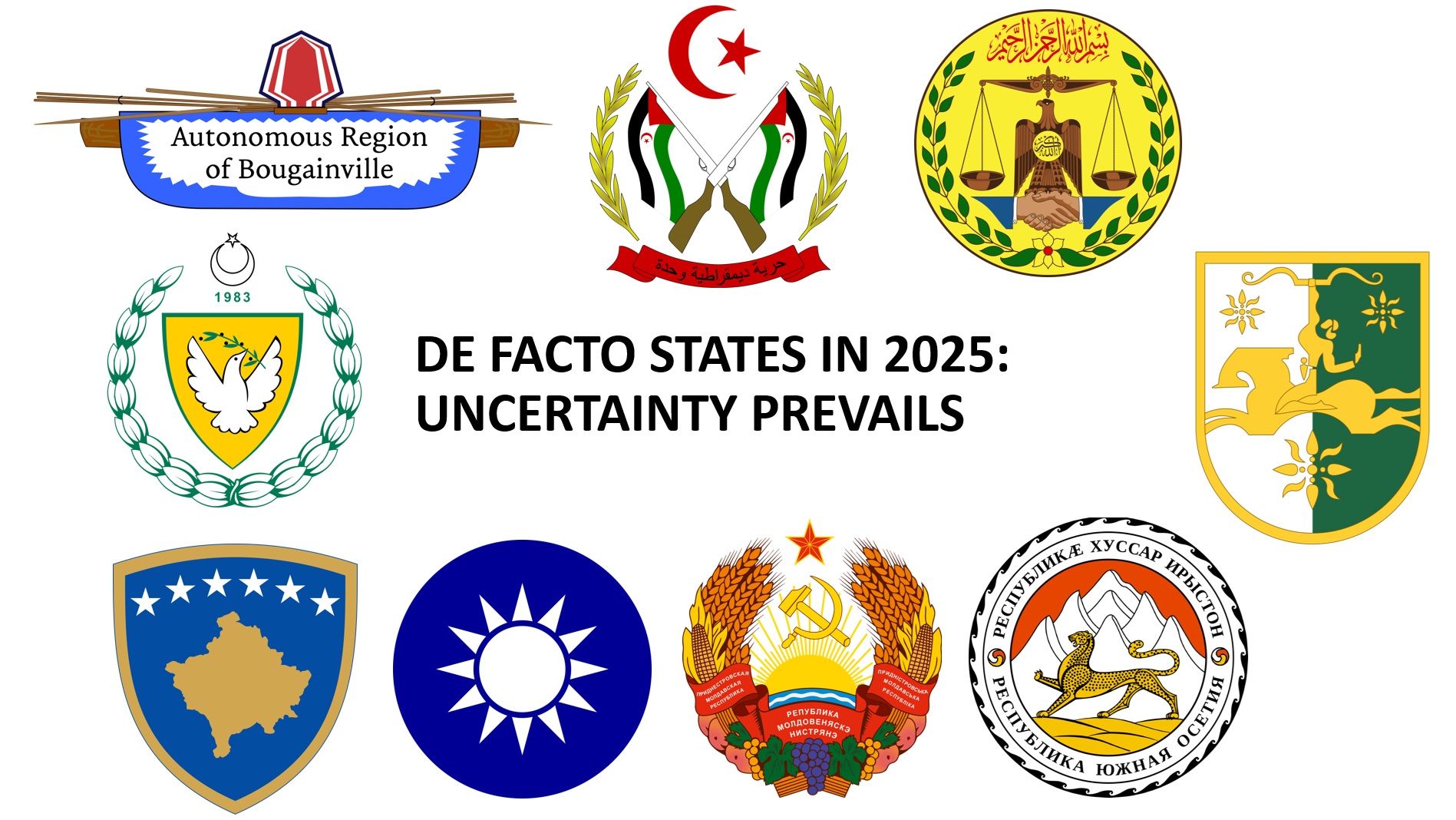
Overview of 2025: De Facto States World
In 2025, de facto states worldwide largely maintained their precarious status quo, resisting transformational breakthroughs or peace agreements amid entrenched stability versus stagnation. Great power rivalries among the US, Russia, and China continue to shape patronage and security dynamics for these entities, from the South Caucasus to the Pacific, while few meaningful negotiations advanced resolutions, challenging earlier predictions of realignments and spawning new breakaways. Formal recognition remained rare and highly politicized, with Somaliland’s late-year acknowledgment by Israel standing out as a notable exception.
Pacific/Oceania: The Autonomous Region of Bougainville
In 2025, Bougainville is still striving for its independence from Papua New Guinea (PNG). Following a 98% vote for independence in 2019, which remains internationally non-binding and has not yet been ratified by Papua New Guinea´s Parliament, Bougainville seeks to gain recognition and sovereignty by 2027, navigating complex regional relations after a brutal civil war. Arguably, it represents the most advanced de facto state-to-state transition process in 2025, as its political institutions and governance have strengthened in preparation for statehood. Whilst not yet independent, its geopolitical interest is increasing; among those are partners such as Australia, China and the US due to its strategic location and natural resource prospects.
After several years of extensive consultation across its islands, diaspora and international partners, Bougainville´s constitutional process could enter a new phase: In early 2025, the Bougainville’s Constituent Assembly begins formal deliberations on its draft constitution. Keeping the 1st of September 2027 as a target for statehood, the leadership continues to build core state institutions and regulatory frameworks in line with the 2001 Bougainville Peace Agreement and subsequent arrangements such as the Sharp Agreement and the Era Kone Covenant. Externally, the leadership makes use of its external relations mandate under the Peace Agreement and deepens regional engagement, aspiring to eventually gain membership or observer status in regional groupings such as the Melanesian Spearhead Group (MSG) – a key diplomatic target for Bougainville’s independence aspirations.
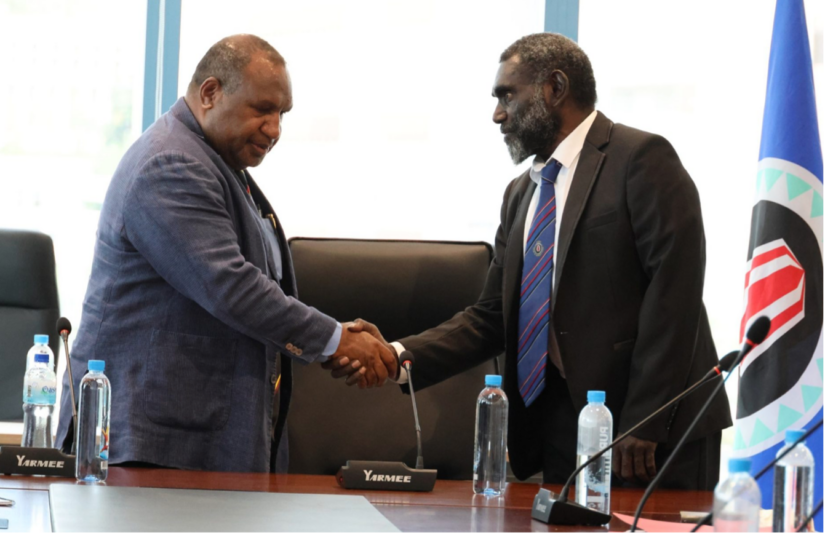
Image: PNG Prime Minister James Marape with Bougainville’s President Ishmael Toroama during a meeting of the Joint Supervisory Body (Source: Autonomous Bougainville Government)
However, a central obstacle to its independence remains in PNG´s parliament still not having chosen to ratifyBougainville´s 2019 independence referendum, despite the Era Kone Covenant’s commitment that the outcome be decided by 2027. As actors in Port Moresby insist on a higher bar regarding the ratification threshold, contrasting Bougainville stance on a simple majority, MPs appear reluctant to schedule the decisive vote. Thereof, Bougainvillean leaders maintain to insist on independence remaining non-negotiable and a prolonged delay provoking a unilateral assertion of sovereignty as the constitution is finalised – while they keep the door open for a negotiated outcome. The international community continues to pursue moderation efforts such as the incorporation of newly agreed mechanisms, exemplary the so-called Melanesian Agreement of mid-2025, hoping to achieve an orderly and mutually agreed transition. Ultimately, however, Bougainville´s status remains unresolved by the end of 2025 and the political process is interpreted as entering its final stretch under critical time pressure.
Besides, Bougainville’s reliance on budgetary transfers from Port Moresby and a lack of domestic revenue in covering expenditure needs, leads to growing economic pressure in 2025. Whilst mining seems profitable, as showcased in the reopening of the Panguna mine, which Bougainville Copper Limited (BCL) and the autonomous government promote as the prospective anchor project for an independent Bougainvillean economy, 2025 sees further technical and commercial preparations in scaling up on-the-ground activities around Panguna and becoming an international mining partner – centring hopes for independence on the economic pillar around mining. Indeed, foreign investors advance exploration programmes in Bougainville, expecting large-scale copper and gold production to resume given the social and political climate shall allow for it. In line, the leadership courts a wide range of international economic partners, from traditional donors to emerging players, while underlining that major resource projects must contribute tangibly to local development and the fiscal foundations of eventual statehood.
Despite such economic efforts touching upon a tangible reality for economic self-reliance and thus, future sovereignty, domestic demands for environmental justice and the need to maintain investor confidence in a still-uncertain political environment need to be balanced. Exemplary, the Panguna Mine Legacy Impact Assessment confirms severe, ongoing environmental and social impacts on downstream communities, strengthening calls from landowners and civil society for a comprehensive remediation and compensation package.
In response, Rio Tinto, BCL and the Autonomous Bougainville Government move to operationalise a new roundtable process in 2025, under a memorandum of understanding that commits the parties to explore a structured remedy mechanism. Community representatives, however, continue to express concern that no binding clean‑up commitments or dedicated, independently managed remediation fund have yet been agreed, and that commercial plans to restart mining risk outpacing concrete measures to address the legacy damage. Legal pressures also persist, as litigation and the threat of further claims keep open the possibility that courts, rather than political negotiation alone, will shape how responsibilities for Panguna’s legacy are allocated.
Africa: Sahrawi Arab Democratic Republic (Western Sahara)
The Sahrawi Arab Democratic Republic (SADR), which claims sovereignty over Western Sahara but administers only the refugee camps and a sliver of territory east of the Moroccan berm, spends 2025 trying to keep the question of self‑determination on the international agenda. Its military Polisario Front maintains low-intensity hostilities and diplomatic efforts from exile in Algeria, whilst Morocco consolidates its control over most of Western Sahara through continued infrastructure investments and settlements. In 2025, the UN Security Council adopt Resolution 2797 and renews the MINURSO´s mandate, a conflict-prevention mechanism, monitoring the security situation in Western Sahara to help prevent an escalation of tensions, a signal of a growing tilt in major-power diplomacy toward Morocco´s autonomy proposal. Despite this, the UN and regional actors such as the Southern African Development Community (SADC) continue to invoke the Sahrawis’ “inalienable” right to independence, leaving the conflict in a protracted stalemate.
2025 thus begins by SADR having to double down on its diplomatic campaign for recognition and self-determination, described as a gradual erosion of international attention to Western Sahara by its leaders. Besides high-level visits by the Polisario Front to long-standing allies such as Algeria and South-Africa, new partners in the Global South emerge, allowing for the conclusion of an April memorandum of understanding between Polisario/SADR and SADC on the 2nd of April 2025 in Gaborone, Botswana, committing the bloc to intensified advocacy for Sahrawi decolonization, and cooperation and support of SADR´s self-determination at the UN and other forums.
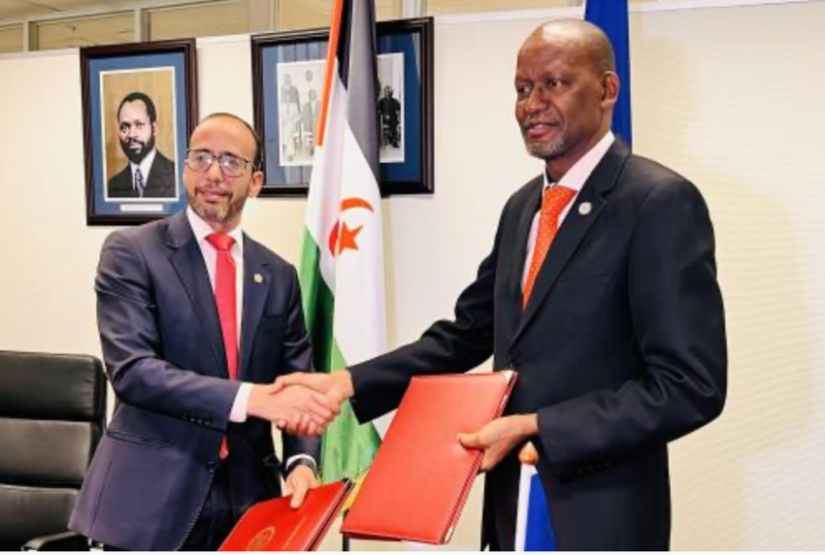
Image: Conclusion of an April memorandum of understanding between Polisario/SADR and SADC (Source: sadc.int)
Notably, this agreement was controversial and not universally accepted within SADC. Several member states (including Malawi, Zambia, Comoros, Eswatini and the Democratic Republic of Congo) publicly rejected the MoU as non-binding or illegitimate, arguing it was signed without proper authorization and the SADC overstepping its mandate and therefore, does not obligate them – thereby reaffirming their support for Morocco’s autonomy proposal instead. Further, SADR´s diplomats react sharply to growing support of Morocco´s autonomy among Western capitals, issuing a series of statements insisting that only a referendum on self-determination can provide a legitimate and lasting settlement.
On the ground, conflict remains locked in a pattern of low-intensity hostilities across the berm, with the UN Secretary‑General’s 2025 report describing continued exchanges of fire, periodic drone and artillery strikes, and mounting risks to MINURSO personnel and local civilians. On one hand, Morrocco consolidates its control over most of the territory through infrastructure projects, incentives for settlers, and expanded administrative integration, whilst on the other, the Polisario Front maintains sporadic armed operations and declares the ceasefire of 1991 definitely over. Human rights organisations and UN briefings highlight persistent allegations of harassment and surveillance of Sahrawi activists under Moroccan rule, as well as harsh conditions in the Tindouf refugee camps, underscoring how the stalled political process continues to translate into everyday insecurity for Sahrawi civilians.
Diplomatically, a key moment comes in October, when the UN Security Council adopts Resolution 2797, renewing MINURSO’s mandate and explicitly situating Morocco’s autonomy initiative “as a serious and credible basis” for negotiations while also reaffirming the Sahrawi people’s right to self-determination. The text, backed by the United States, France, and the United Kingdom but criticised by Algeria and several other states for tilting toward Rabat, is hailed by Morocco as a victory and condemned by the Polisario as entrenching a “colonial status quo”. Hereby, the UN is seemingly straddling two positions at once: As a formally neutral institution, committed to self-determination for the Sahrawi people, it politically shifts towards Morocco´s autonomy plan, viewing such as the most “realistic” option avoiding instability, despite falling short of achieving full independence.
In response, the SADR leadership vows to intensify both armed resistance and legal diplomatic efforts, arguing that only sustained pressure through African solidarity, strategic litigation, and renewed UN engagement, can prevent Western Sahara’s incorporation into Morocco from becoming an irreversible fait accompli.
Africa: Somaliland
Functioning as a de facto independent state since 1991, Somaliland enters 2025 focused on leveraging new geopolitical openings created by its 2024 memorandum of understanding with Ethiopia on Red Sea access. Under this agreement, it offers Ethiopia access to the port of Berbera in exchange for a guarantee of recognition of its sovereignty. This agreement, however, heightens tensions with Somalia´s federal government and simultaneously raises the territory´s profile among regional and external actors. Despite its historical recognition by Israel in late 2025, the first UN member state to recognize Somaliland, it is still being treated as part of Somalia by most states. Debates about its democratic record, its role in Red Sea security, and the implications of potential Ethiopian recognition keep the question of its formal statehood more prominent than at any time in the past decade.
Entering 2025 under a new administration, President Abdirahman “Irro” Mohamed Abdullahi, elected in late 2024, promises a less confrontational style and a review of the Ethiopia-Somaliland memorandum of understanding which is throwing a shadow on its regional diplomacy and domestic politics. Hereby, the government finds itself under immediate pressure to clarify whether the agreement´s implementation consequentially destabilises relations with Somalia and neighbouring states, as Somaliland pledges sea access at Berbera and a potential coastal lease in exchange for Ethiopian recognition.
In Hargeisa, the Somaliland government insists that the MoU paves the way toward its long-sought international recognition, whereas Somali authorities denounce it as an illegitimate violation of Somalia’s territorial integrity and constitutional order—an interpretation that has received support from most external actors, who base their position on Somalia’s 1960 borders. However, given that Somaliland’s ports are strategically located near the Bab el-Mandeb Strait—a major global shipping chokepoint—and that Ethiopia’s access to a seaport could alter trade routes and logistics, the international community is well aware of the deal´s implications for Red Sea security and regional commerce. It is therefore assessing the potential strategic benefits and risks without formally endorsing the agreement.
Throughout the year, the question of Ethiopian recognition has remained unresolved, with Addis Ababa affirming its interest in securing sea access while avoiding a clear public stance on Somaliland’s sovereignty. Hence, the parliamentary question on whether the MoU obliges formal recognition remains unanswered leaving the impression that Abiy Ahmed´s government is playing the field, negotiating with both Mogadishu and Hargeisa. In such, commentators anticipate that any implementation without broader regional concurrence could fuel escalation, empower armed spoilers, and complicate counter-terrorism efforts against Al Shabab, even as the deal remains attractive to Ethiopian planners seeking to diversify away from near total dependence on Djibouti’s ports. Domestically, Irro faces the challenge of balancing constituencies sceptical of ceding the coastal territory with elites who view the MoU as the most realistic route to de jure recognition – a central test of his leadership in 2025.
Externally, Taiwan and a small group of sympathetic Western policymakers cultivate constrained, but symbolically important partnerships with Somaliland. Especially the continuity in its relationship with Taiwan portrays an economic opportunity in line with a hedge against growing Chinese influence in the Horn – provoking Chinese efforts of pressuring Somalia into minimizing Taiwanese activity and to contest any moves that might normalise Somaliland’s separate status.
Washington and European capitals thus call for closer coordination with Taiwan and Somaliland on Red Sea security and critical mineral supply chains, envisioning a modest approach in form of high-level visits, technical assistance, or a revived US-Somaliland partnership framework, as a nuanced or perhaps rather hesitant, strategy in establishing entities without formal recognition of Somaliland’s statehood.
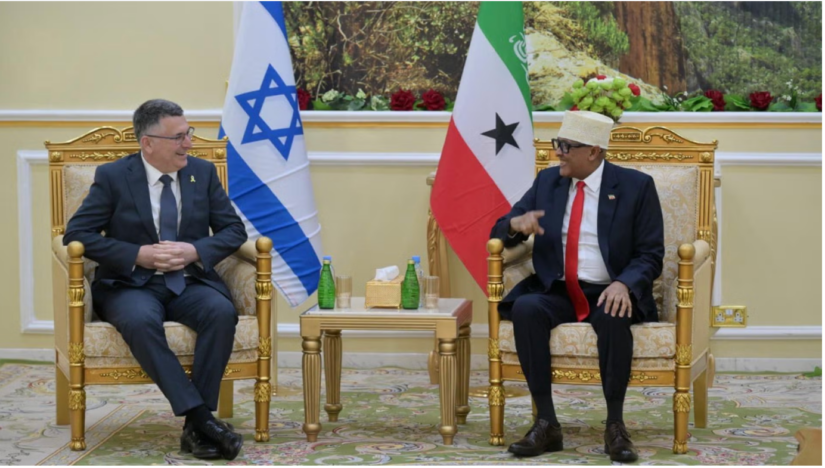
Image: Israeli Foreign Minister Gideon Saar meets with Somaliland President Abdirahman Mohamed Abdullahi in Hargeisa, Somaliland, on January 6, 2026. (Source: Getty Images)
Notably, Israel formally recognized Somaliland in late 2025, marking the first UN member to do so, whilst Taiwan, UAE, the US, the UK, Kenya, South Sudan and Ethiopia stick to pragmatic or unofficial engagement. In result, Hargeisa´s strive for recognition remains unresolved by the end of the year, but its deepening relationship with Taiwan stages Somaliland at the centre of debates over how shifting great power rivalries will reshape the Horn of Africa.
Europe/Eurasia: Abkhazia
Abkhazia and South Ossetia are separatist regions of Georgia in the South Caucasus that are internationally recognized as part of Georgian territory. Since 2008, however, they have functioned as de facto independent republics backed by Russia, sustaining their de facto statehood through external patronage. Georgia and most of the international community continue to regard them as Russian-occupied territories.
In 2025, Abkhazia continues to seek broader international recognition while remaining politically and economically dependent on Russia, its principal security guarantor and financial patron. Following the resignation of former President Aslan Bzhania in 2024—amid protests over a legislative proposal that would have permitted Russian citizens to purchase real estate—snap-elections were held in February–March 2025. The victory by Badra Gunba,backed by Moscow, is double-edged: Reassuring those who favour close alignment with Russia and deepening fears among others who see Abkhaz autonomy as eroding under expanding Russian influence. Indeed, significant Russian involvement in the campaign has been noted, such as media support behind the scenes pressuring local elites, underscoring the patron-client nature of the relationship and the limited room Abkhaz authorities have to deviate from Kremlin preferences.
Encouraged by the 2024 protests, opposition parties, veterans’ groups, and civil society actors continue to contest new investment or land-transfer initiatives that are perceived as privileging Russian capital and threatening Abkhaz control over the coastline and agricultural land. Property issues remain particularly sensitive, as many Abkhaz citizens regard restrictions on foreign ownership—primarily by citizens of the Russian Federation—as one of the last safeguards of de facto sovereignty. In this context, liberalisation is widely feared to result in demographic dilution and deeper integration into the Russian economic space.
At the same time, the new administration promises economic growth, higher pensions, and infrastructure upgrades, largely financed through Russian subsidies or joint projects in tourism and energy, portraying deeper integration as one of the few realistic paths to development. Meanwhile, persistent domestic problems, such as corruption, organized crime, and weak public services, continue to fuel popular frustration. In particular, younger segments of Abkhaz society remain sceptical about whether a leader closely associated with the Kremlin can deliver meaningful reforms.
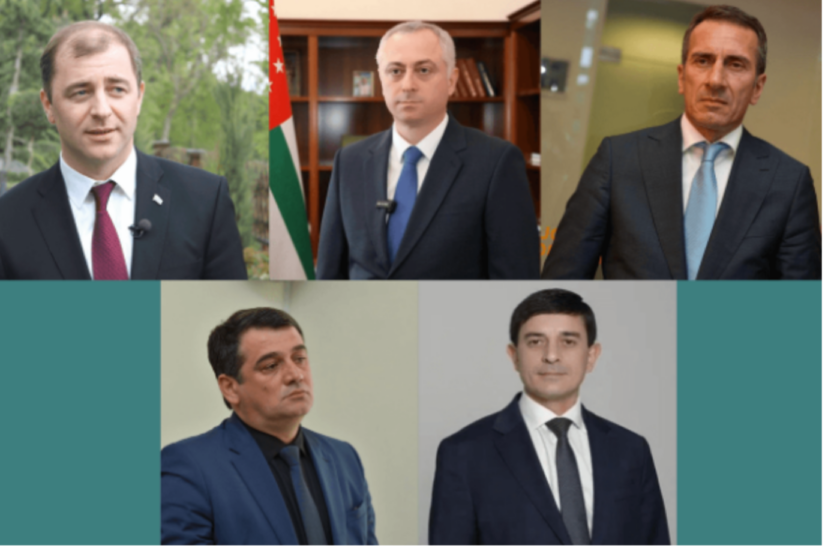
Image: Candidates in Abkhazia’s 2025 presidential elections. Clockwise from top left: Adgur Ardzinba, Badra Gunba, Oleg Bartstits, Adgur Khurkhumal, and Robert Arshba (Source: Lily Samarine/OC Media)
Externally, Abkhazia´s diplomacy thus remains constrained by its limited recognition. Only a handful of states recognize Abkhazia, even though Sukhumi is leveraging ties to Russian allied entities, other de facto states, or specific Middle Eastern partners to overcome isolation. Unsurprisingly, relations with Tbilisi stay frozen, as Georgia continues to insist on the Russian occupation of its territory and is unwilling to pursue any status discussion broadening its talks with Moscow. In the same line, Abkhaz authorities reject the idea of confidence-building initiatives with Georgia, fearing they might be instrumentalized to re-expand Georgian influence.
Furthermore, the lingering effects of the war in Ukraine complicate this picture, as Western sanctions and Russia’s own fiscal pressures raise questions about the sustainability of Moscow’s financial support, even though there is no indication that Russia is prepared to reduce its military footprint or accept any compromise on Abkhazia’s status in 2026.
Europe/Eurasia: South Ossetia
In 2025, South Ossetia remains firmly aligned with Russia, with the de facto authorities reiterating that deepening integration with the Russian Federation, especially under the 2015 Treaty on Alliance and Integration and subsequent implementing agreements, remains the cornerstone of their security and foreign policy.
The leadership in Tskhinvali thus continues to frame South Ossetia as a sovereign partner of Moscow rather than a candidate for formal annexation, stressing that the region’s “strategic choice” since 2008 has been to build its statehood while harmonising legislation, armed forces, and customs procedures with Russia. Security cooperationremains tight, with Russian border guards and troops controlling key crossing points and much of the administrative boundary line with Georgia, and local officials presenting this presence as essential protection against perceived threats from Tbilisi and NATO.
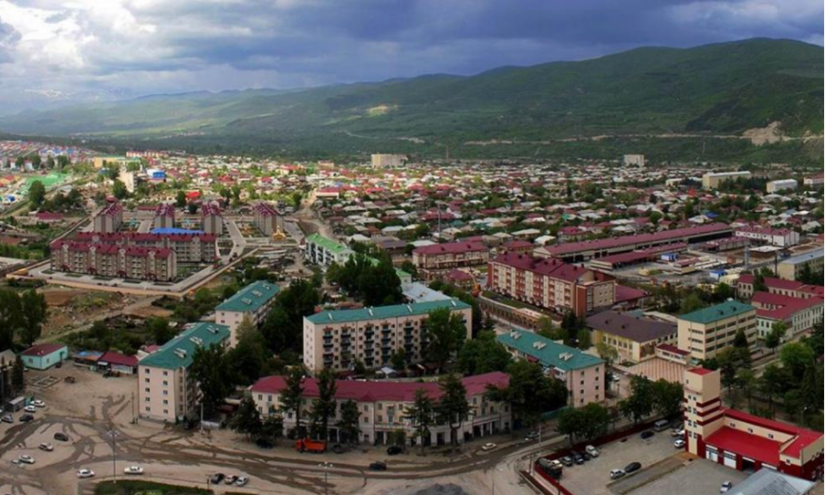
Image: Tskhinvali (Source: caucasuswatch.de)
Domestically, however, South Ossetia continues to struggle with a small population, limited economic base, and heavy dependence on Russian budget transfers and employment opportunities across the border, constituting factors that contribute to ongoing out migration and socio-economic stagnation. Political life is dominated by pro-Russian parties and personalities, but periodic disputes over corruption, distribution of Russian aid, and promised infrastructure projects fuel elite rivalries and public discontent. The absence of broader international recognition, together with tight Russian control over external access routes, leaves Tskhinvali with little room for independent diplomacy; contacts with Georgia are largely confined to technical incident prevention mechanisms, even as detentions of Georgian villagers and “borderisation” incidents keep tensions simmering along the line of separation.
In this context, both Abkhazia and South Ossetia remained deeply embedded in Russia’s regional strategy in 2025, but their long term political and economic prospects appear increasingly uncertain, shaped as much by developments in Moscow and the wider Russia-West confrontation as by local dynamics.
Europe/Eurasia: Kosovo
Widely recognized by the majority of EU and NATO countries and functioning as a de facto independent state since 2008, Kosovo enters 2025 focused on leveraging new geopolitical openings created by EU enlargement dynamics and incremental normalisation with Serbia, still partially not recognized by Serbia and some EU-members – demonstrating a case of selective recognition and contested legitimacy.
In 2025, Kosovo thus pursues ongoing efforts to consolidate statehood trough international institutions as under the EU-facilitated Ohrid framework, offering Belgrade de facto recognition through pragmatic steps like the Association of Serb-Majority Municipalities in exchange for Serbia dropping formal objections to Kosovo’s sovereignty at the UN. This reciprocal arrangement, however, is still facing diplomatic challenges from Serbia as given by the heightened tensions with Belgrade’s nationalist government, simultaneously raises Pristina’s profile among regional and external actors.
Despite over 100 recognitions, many UN member states including the five EU sceptics still treat Kosovo as part of Serbia’s constitutional order. Debates about its democratic consolidation, its role in Balkan security, and the implications of potential Serbian compromise keep the question of its formal statehood more prominent than at any time in the past decade.
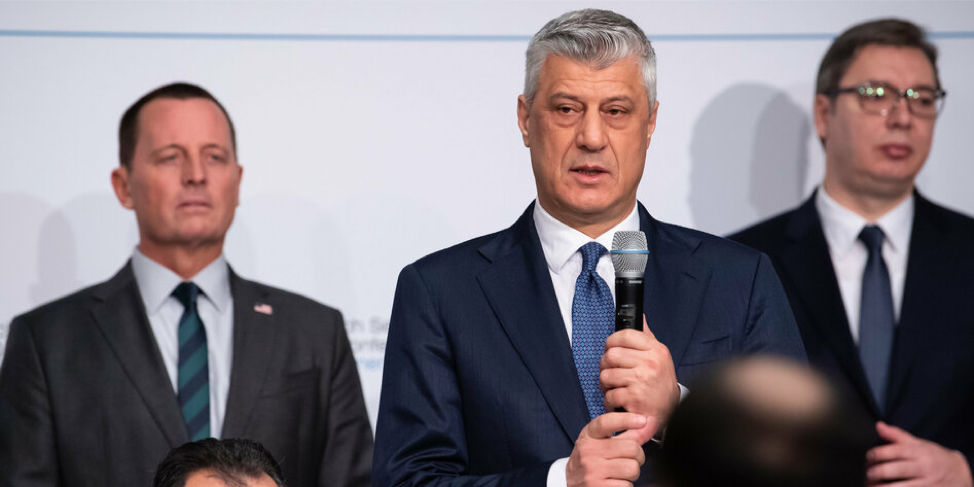
Entering 2025 under a consolidated administration, Prime Minister Albin Kurti, re-elected in late 2024, promises a less confrontational style and a review of the northern Mitrovica security arrangements which are casting a shadow on its regional diplomacy and domestic politics. Hereby, the government finds itself under immediate pressure to clarify whether the Ohrid implementation consequentially destabilises relations with Belgrade and neighbouring states, as Kosovo pledges administrative decentralisation in Serb areas and a potential troop withdrawal from the north in exchange for EU visa liberalisation and accelerated membership talks.
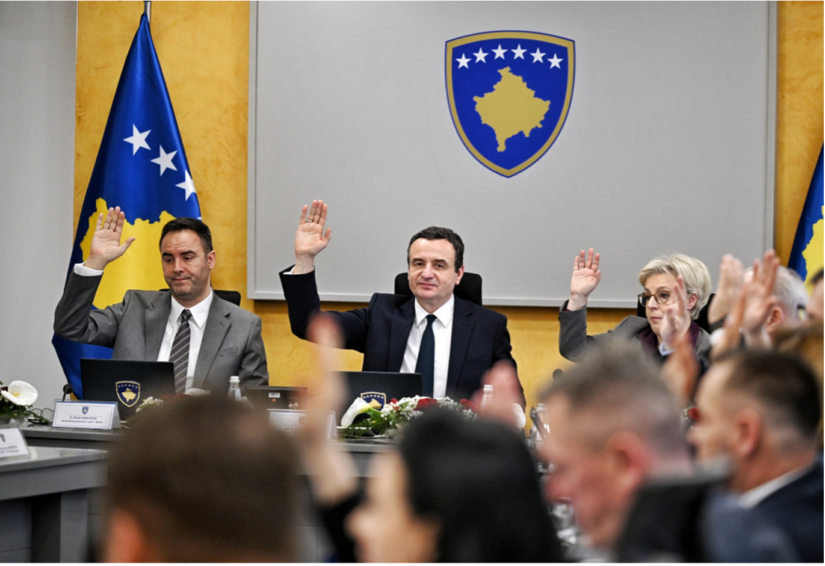
Image: On 11 February 2026, the Assembly of Kosovo approved the formation of the new government led by Prime Minister Albin Kurti. (Source: cfwbs.org)
The Kosovo government maintains that the Ohrid Agreement paves the way for its long-sought broader international recognition, whereas Serbian authorities denounce it as an illegitimate violation of Serbia’s territorial integrity and Resolution 1244 – an interpretation that has received support from Russia and China on the basis of UNSC precedent. At the same time, Kosovo’s control over key transit routes, mining resources, and strategic highways near the administrative boundary—an important connectivity chokepoint—means that any de facto economic access granted to Serbia could alter trade flows and logistics. The international community is therefore well aware of the agreement’s implications for Balkan security and regional commerce, assessing potential strategic benefits and risks while avoiding any formal resolution of Kosovo’s final status.
Throughout the year, the issue of mutual recognition has remained unresolved, with Belgrade affirming its interest in the benefits of EU integration while avoiding a clear public stance on Pristina’s sovereignty. This has created the impression that President Vučić’s government is hedging its position, negotiating simultaneously with both Brussels and Moscow. As such, commentators anticipate that any implementation without broader regional concurrence could fuel escalation, empower parallel structures, and complicate efforts to combat organized crime, even as the framework remains attractive to Serbian policymakers seeking to diversify away from isolationist dependence on Russia. Domestically, Kurti faces the challenge of balancing Albanian constituencies that are sceptical of concessions with political elites who view the Ohrid Agreement as the most realistic path toward de jure consolidation—making it a central test of his leadership in 2025.
Externally, the US, the EU, and the UK maintain constrained yet symbolically significant partnerships with Kosovo, particularly through the continued presence of NATO’s KFOR mission. This engagement is framed both as an economic opportunity and as a hedge against Russian influence in the Balkans. In response, Moscow seeks to pressure Belgrade to limit Western involvement and to contest any steps that might further normalise Pristina’s separate status. Washington and several European capitals therefore call for closer coordination on border securityand critical mineral supply chains, envisioning a calibrated approach involving high-level visits, technical assistance, or a revived Belgrade–Pristina dialogue framework. This strategy seeks to strengthen relations without formally resolving contested status issues. Notably, no major new recognitions occurred in 2025. The EU’s five non-recognising member states, along with Russia, China, and Serbia, maintain their principled stance of non-recognition. As a result, Pristina’s pursuit of full sovereign equality remained unresolved by year’s end. Nevertheless, its deepening ties with the EU position Kosovo at the centre of debates over how shifting great power rivalries may reshape the Western Balkans.
Europe/Eurasia: Transnistria
Functioning as a de facto independent state since the early 1990s, Transnistria enters 2025 focused on leveraging new geopolitical openings created by Moldova’s EU candidacy and the fallout from Russia’s war in Ukraine, while being influenced both domestically and externally by tensions with Moldova and Russia.
Within the stalled 5+2 negotiation format and through bilateral confidence-building measures, limited economic reconnection—particularly via rail and energy links—has continued amid recurring crises. Russia has demanded security guarantees for its peacekeeping forces as a precondition for further engagement, while Moldova has pursued reintegration without conceding on the withdrawal of Russian troops. These developments heighten tensions with Moldova’s pro-EU government and simultaneously raise Tiraspol’s profile among Russian-aligned actors. Despite recognition only from a handful of de facto entities, most states treat Transnistria as part of Moldova’s constitutional order. Debates about its Russian dependency, its role in Black Sea security, and the implications of potential Moldovan compromise keep the question of its formal statehood more prominent than at any time in the past decades.
Transnistria entered 2025 under a consolidated administration bolstered by President Krasnoselsky’s loyalists, who swept all 33 Supreme Council seats in the November 2025 parliamentary elections amid record-low turnout. President Vadim Krasnoselsky promises a pragmatic style and a review of the Ukrainian border closure arrangements, which are casting a shadow on regional diplomacy and domestic politics. Hereby, the government finds itself under immediate pressure to clarify whether economic reconnection consequentially destabilises relations with Moscow and neighbouring states, as Transnistria maintains customs union alignment amid ongoing EU-mediated financial aid and the absence of gas transit post-2025.
The Transnistrian government insists that the reintegration talks lead to its long-sought “special status” recognition, in contrary to Moldovan authorities denouncing it as an illegitimate violation of Moldova’s territorial integrity and sovereignty. However, given that Transnistria controls key gas transit routes, industrial zones, and strategic bridges near the Ukrainian border—an important connectivity chokepoint—any expanded economic access for Moldova could alter energy flows and logistics. The international community is therefore well aware of the arrangement’s implications for Eastern European security and regional trade, assessing potential strategic benefits and risks while avoiding any formal resolution of Transnistria’s final status.
Throughout the year, the issue of “special status” has remained unresolved, with Chișinău affirming its interest in the economic benefits of closer integration while avoiding a clear public stance on the presence of Russian troops. This has created the impression that President Sandu’s government is maintaining strategic ambiguity, negotiating simultaneously with both Brussels and the Kremlin. In this context, commentators warn that any implementation without broader regional concurrence could fuel escalation, empower smuggling networks, and complicate efforts to counter hybrid threats. At the same time, the framework remains attractive to Moldovan policymakers seeking to diversify away from energy dependence on Gazprom supply routes.
Domestically, Krasnoselsky faces the challenge of balancing pro-Russian constituencies sceptical of concessions with elites who view talks as the most realistic route to de jure security guarantees – a central test of his leadership in 2025. Externally, Russia and a small group of sympathetic Eastern European actors cultivate constrained but symbolically important partnerships with Transnistria, especially continuity in Gazprom energy supplies portraying an economic lifeline in line with a hedge against NATO expansion – provoking Brussels’ efforts to pressure Chișinău into minimising Russian activity and to contest any moves that might normalise Tiraspol’s separate status.
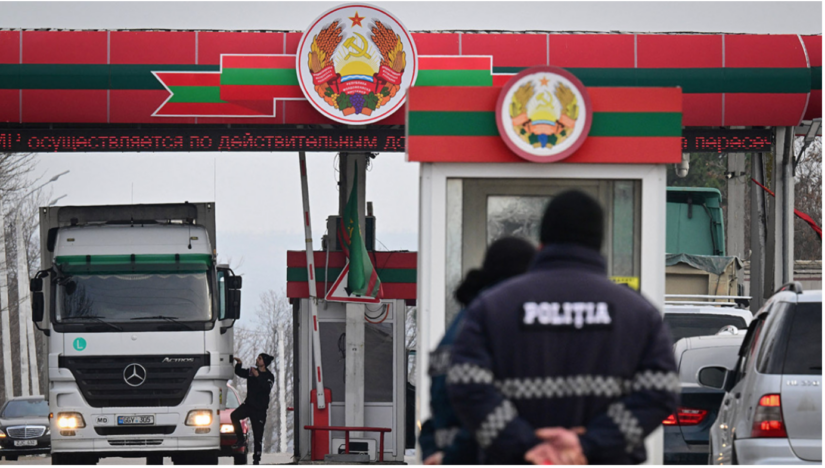
Image: Cars wait in line at the Bender crossing point between the self-proclaimed republic of Transnistria and Moldova. (Source: Daniel Mihailescu / AFP)
Moscow and regional capitals thus call for closer coordination on border security and critical energy supply chains, envisioning a modest approach in form of high-level visits, technical assistance, or a revived 5+2 negotiation framework, as a nuanced strategy in establishing relations without formal recognition of frozen conflict status. Transnistria will most likely stay unrecognised in 2026, whilst Russia, Gazprom entities, and a few CSTO observers stick to pragmatic engagement with Tiraspol, and the EU, US, Romania, Ukraine and Moldova maintain principled non-recognition. Its deepening ties with Moscow stage Transnistria at the centre of debates over how shifting great power rivalries will reshape Eastern Europe.
Europe/Eurasia: Turkish Republic of Northern Cyprus
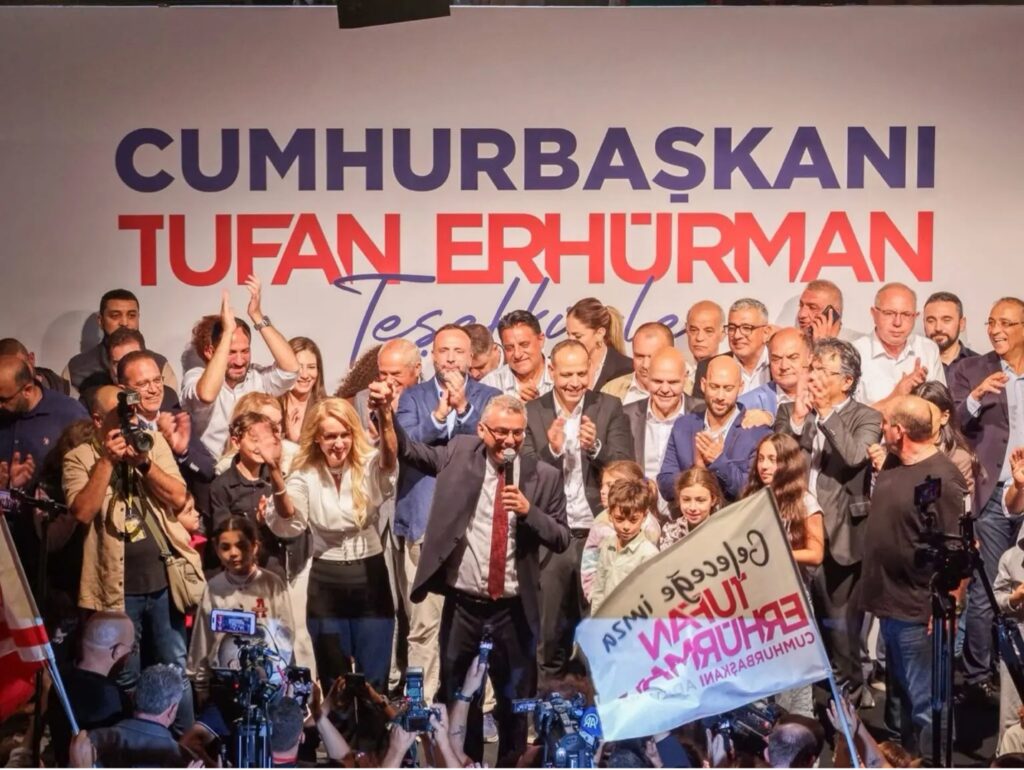
The Turkish Republic of Northern Cyprus (TRNC) has effectively functioned as a de facto independent state since its declaration in 1983. As it enters 2025, it is poised to capitalize on new geopolitical openings created by the upcoming presidential elections and the renewal of UN-mediated talks on Cyprus. Under the leadership of President Tufan Erhürman, elected in late October 2025, the TRNC it is actively seeking to strengthen its position by offering Greek Cypriots confidence-building measures (CBMs) in exchange for recognition of its sovereign equality and a share of revenue from Cyprus’s offshore gas reserves.

Image: Tufan Erhurman and his wife Nilden Erhurman cast their ballots at a polling station during the Turkish Cypriot leadership election on October 19, 2025. (Source: Aljazeera)
This proposed reciprocal arrangement however, is heightening tensions with the government in Nicosia. The TRNC’s push for recognition as an equal partner challenges the status quo, significantly raising Ankara’s profile within the broader Turkic world, while the international community largely considers it part of Cyprus, involving ongoing disputes over Exclusive Economic Zone (EEZ) gas fields and EU accession keeping its statehood in the spotlight.
Following the presidential elections, Erhürman’s administration continues to advocate for a structured negotiation stance and approach to UN-mediated talks. Posing preconditions for resuming negotiations, he insists on equality between the TRNC and the Republic of Cyprus, as expressed in an acceptance of rotating presidency, a clearly defined timetable, settlement of property issues taken by Turkish Cypriots, and no return to the status quo if talks fail. Such stipulations aim to pressure Nicosia by framing talks as a “last chance” opportunity, with no peace achievable without Ankara’s cooperation.
A core element of Erhürman’s position is preserving all convergences achieved during the 2017 Crans-Montana talks and refusing to reopen them or start from scratch. He argues this prevents endless debates over “your convergences versus mine,” as seen in past processes like the Annan Plan, an attempted UN-mediated constitutional transition, ultimately stalling and failing to resolve the dispute without having advanced beyond prior frameworks. Thus, Erhürman demands an acceptance of Crans Montana gains in principle, ranging from security arrangements to governance, to build on established progress, rather than enabling a reset. In this way, he aims to ensure efficiency toward a bizonal, bicommunal federation with political equality.
This stance stems from the Crans Montana failure, where no resolution emerged due to perceived maximalist Greek Cypriot demands, like zero Turkish troops and ending Turkey’s guarantor role. Such parameters are viewed by TRNC as defunct and perpetuative of the island’s division whilst embodying the root of the status quo – thus rendering continued Turkish intervention rights to maintain troop presence on the island inevitable. Since the summit’s collapse, no formal peace talks have occurred; Erhürman rejects informal elder dialogues, prioritizing structured negotiations to avoid repeating history.
Erhürman´s four-point methodology further reinforces this: political equality upfront, time-limited talks, recognition of past convergences, and guarantees against status quo reversion if Greek Cypriots exit. Recent trilateral meetings with Christodoulides and UN envoy Holguín Cuellar yielded only partial progress (described as “one-eighth”), underscoring his demand for full implementation before comprehensive settlement. He has critiqued Christodoulides´ new convergence lists as reopening debates, emphasizing that areas like rotating presidency must be clarified without reverting to square one.
Recent international engagement efforts have shown that the TRNC has pursued enhanced international visibility through the Organisation of Turkic States (OTS), where it holds observer status, bolstering ties in the Turkic world amid limited formal recognition beyond Turkey. In May 2025, it hosted the 17th Meeting of the OTS Council of Elders in Girne (Kyrenia), reviewing prior recommendations and OTS initiatives which demonstrate its growing regional role. Also in May 2025, the Budapest Informal Summit’s declaration named the TRNC an “inseparable part of the Turkic world,” welcomed by then-President Tatar and signaling diplomatic gains backed by Turkey. In March 2025, TRNC Foreign Ministry officials represented it at the 5th OTS Coordination Committee meeting in Istanbul, alongside member and observer states. These engagements capitalize on geopolitical shifts, strengthening de facto ties without formal state recognition, while Erhürman reviews two-state dialogue to clarify the TRNC’s trajectory, drawing EU mediation pressure on borders and Ankara´s support for equality. Nicosia opposes partition, but TRNC efforts via OTS position it for potential tourism, investment, and dialogue gains.
Asia: Taiwan
Functioning as a de facto independent state since 1971 after Republic of China lost its seat at UN, Taiwan enters 2025 focused on leveraging geopolitical tensions stemming from US-China rivalry across the Strait. Under President Lai Ching-te, it strengthens defence ties with the US and allies through arms purchases and tech cooperation amid Beijing’s escalating military drills.
Under President Lai Ching-te, Taiwan offers Washington enhanced defence cooperation in exchange for arms sales and tech partnerships amid Beijing’s military encirclement. This arrangement heightens tensions with China’s CCP government while raising Taipei’s profile among Indo-Pacific allies. Despite formal recognition by only 11 UN members plus the Holy See, most states treat Taiwan as a key economic partner under the “One China” policy.
For Taiwan, its semiconductor dominance offers a “silicon shield”, deterring invasion via global economic fallout, yet with waning credibility as TSMC expands abroad, leading to a dilution of Taiwan´s monopoly and exposing it further to foreign influence or disruption. Whilst controlling the Taiwan Strait enhances US allies´ defences such as Japan or the Philippines, and is denying China easy ocean access, its fall would shift regional power on the one hand, but not collapse the US posture entirely on the other, given US allies´ island chain advantages. Overall, the US shows military and economic commitment to the protection of Taiwan via arms sales in 2025, and Trump´s National Security Strategy prioritizing “military overmatch” deterrence, encouraging spending by allies but is conversely at the same time avoiding formal guarantees and creating strategic ambiguity. Exemplary, in October 2025, the US State Department asserts continuity at a meeting in Busan, South Korea, stating that US policy towards Taiwan “has not changed” and will remain grounded in longstanding frameworks. However, a reluctance to commit despite insisting on continuity resembles a balancing act between deterrence and diplomatic transnationalism, as further illustrated by no mention of Taiwan during the meeting between Trump and Xi Jinping in Busan early November 2025.
Taiwan´s current administration thus pursues asymmetric defence buildup, with Lai’s 2025 strategies boosting defence to 5% GDP by 2030 to align with US self-reliance calls amid turbulent bilateral ties marked by congressional activism. Additionally, a review of cross-strait economic reliance is casting a shadow on Taiwan’s regional diplomacy and domestic politics and faces pressure to clarify whether US arms deals destabilise relations with Beijing – which is sharply escalating military pressure under its “Justice Mission 2025”. Taipei insists on alliances against “separatism” claims, with stable recognition but rising stakes from Beijing´s hybrid incursions in form of Chinese People’s Liberation Army’s (PLA) grey-zone tactics.
Furthermore, Taiwan´s political posture is impacted by a potential Russian success in Ukraine which could embolden Beijing by validating “grey-zone” coercion and rapid seizures, signalling Western limits in case of a growing US fatigue post-conflict. Such an event could potentially accelerate Xi´s unification attempt although there is a case to make for China following its own, independent timeline – yet, apparently no later than 2035, tied to the legitimacy of the CCP.
Taipei thus insists on deepening alliances to secure its de facto sovereignty which is being denounced by Beijing as “separatism”. However, as Taiwan controls the world’s chip production near critical sea lanes, the international community weighs tech security benefits/risks without challenging “One China.” Throughout the year, recognition status remains stable between Washington affirming deterrence yet avoiding independence pledges, leaving impression that Xi is pursuing a grey-zone coercion-strategy. Commentators warn that escalation risks empowering hawks and would complicate trade, even as partnerships attract allies diversifying from dependence on China due to strategic value in Taiwan´s chips and strait security.
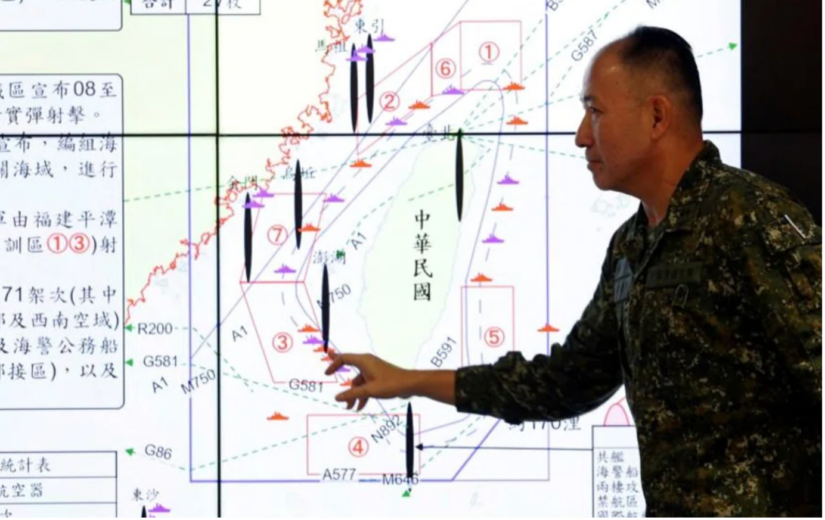
Image: Hsieh Jih-sheng, deputy chief of the general staff for intelligence at Taiwan’s defence ministry, pointing at a map during a press conference about China’s military drills around Taiwan, in Taipei, Taiwan, on 30 December 2025. (Source: Tsai Hsin-Han/Reuters)
Domestically, Lai balances unification sceptics with elites viewing US ties as a survival route, constituting a central test of the administration in 2025 while externally, the US, Japan, and Australia have deepened partnerships with Taiwan while sustaining AUKUS continuity as an economic hedge against coercion (prompting intensified PLA drills) through Washington-led calls for coordination on semiconductors and security, alongside modest visits and assistance as a nuanced strategy eschewing formal recognition. Hereby, Taipei counters Beijing’s “Justice Mission 2025” exercises through US commitments without provoking invasion. However, with no new diplomatic allies gained or lost amid pragmatic US policy, Taipei’s de facto status endures, anchoring debates on Indo-Pacific power shifts.
Middle East: Palestine
Existing as a de facto partially recognised state since the Oslo Accords in 1993, Palestine is navigating internal divisions and external pressures in 2025, focusing on rebuilding in the wake of the Gaza conflict and leveraging geopolitical shifts from the July 2025 UN two-state conference and the ceasefire in Gaza. Under the Palestinian Authority (PA) and Hamas, the push for statehood continues with an offer of disarmament, PA reforms, and security coordination with Israel in exchange for reconstruction aid and further statehood recognition.
This diplomatic framework, while positioning Palestine as an increasingly prominent actor among Global South and European states, heightens tensions with Israel, rejecting any unilateral moves toward statehood despite Palestine having received recognition from 156 countries by late 2025; however, many Western powers and Israel still view Palestine as non-sovereign. Central to the discussions are debates over Gaza’s governance, the PA’s internal unity, and the reconstruction process, which remain focal points in the broader statehood push.
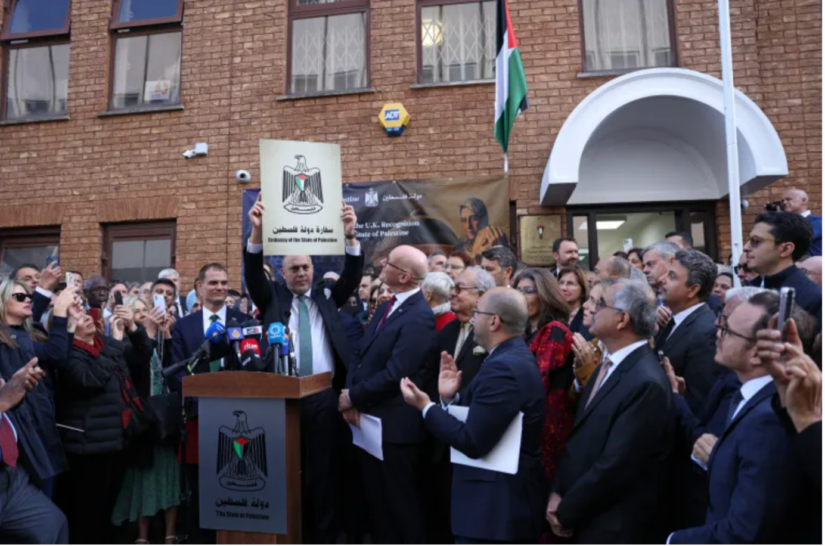
Image: Head of the Palestine Mission to the UK, Husam Zomlot, reacts as he holds a plaque with the words ‘Embassy of the State of Palestine’, during a flag-raising ceremony outside the Mission in west London on September 22, 2025. (Source: Aljazeera)
Palestinian President Mahmoud Abbas commits to reforms within the PA and the disarmament of Hamas as outlined in the New York Declaration, seeing these reforms as essential for securing international aid and advancing the statehood agenda. Yet, Abbas is facing significant domestic pressure: The government is expected to unify PA and Hamas rule, hold elections, and move forward with demilitarization while maintaining international support. These reforms are presented as a pathway to self-determination, yet Israel continues to denounce the unilateral approach, with the US backing Israel’s security concerns.
The Israeli efforts to undermine Palestinian Statehood have intensified over 2025, with Netanyahu declaring to have “blocked” Palestinian statehood for decades, as his government advanced record settlement expansion: 41 new outposts approved being the highest number on record, alongside 22 new settlements, the largest expansion in decades, and plans for more than 28,000 housing units.
These projects extend into sensitive areas such as Jenin and Hebron, further fragmenting Palestinian territorial contiguity and raising questions about the viability of a future state. Accordingly, far-right Finance Minister Bezalel Smotrich has openly called for the application of Israeli “sovereignty,” framing the expansion drive as a strategic consolidation of control. At the same time, the large scale eviction of Palestinians from designated buffer zones (reportedly encompassing 75% of Gaza by mid-2025) has deepened concerns about the entrenchment of permanent Israeli dominance.
Although no comprehensive West Bank annexation law passed the Knesset in 2025, legislative momentum has been building. A bill supporting annexation gained preliminary approval in October by a narrow 25–24 vote, and a July resolution endorsed applying Israeli sovereignty to parts of the West Bank. Netanyahu reportedly dismissed the moves as a “provocation,” while US officials, including Vice President JD Vance, criticized the effort as a “stupid stunt,” wary of derailing fragile Gaza ceasefire negotiations. Nevertheless, the initiatives signal a growing hardline influence within Israeli politics: In November 2025, Israel also lobbied Washington to remove references to a “pathway to statehood” from proposed UN Security Council resolutions on Gaza, with senior officials such as Defence Minister Israel Katz and Foreign Minister Gideon Saar reiterating their opposition to the creation of a Palestinian state. Human rights organizations, including Amnesty International, have described these developments as unlawful annexation measures, arguing that a climate of international impunity has enabled an accelerated reshaping of the conflict’s territorial realities.
Strategically, Gaza and the West Bank remain vital chokepoints for international aid and religious pilgrimages. As such, the control of reconstruction access could reshape regional dynamics, though the international community remains cautious, weighing the potential benefits against the risks of endorsing Palestine given its lack of clear borders or not yet having achieved full sovereignty. Hence, throughout 2025, Palestine’s statehood remains unresolved. While donors affirm aid, they condition support on continued reforms, creating a delicate balance. Simultaneously, Prime Minister Netanyahu’s government, along with US-backed mediation efforts, continues to play a strategic role, adding complexity to the situation, leading critics to warn that the lack of consensus could empower spoilers, complicating counter-terrorism efforts and undermining peace-building initiatives.
On the international stage, Palestine’s relationships with Arab states and the EU deepen, with reconstruction seen as a key tool for economic development and a hedge against extremism, though EU support remains limited, focusing on security coordination and aid without full sovereignty endorsement, as Israel’s vetoes persist, particularly regarding any steps toward formal statehood.
Notably, by the end of 2025, countries such as Mexico, Australia, France, the UK, Canada, Portugal, Monaco, San Marino, Luxembourg, Malta, and Andorra have officially recognized Palestine, signalling incremental diplomatic progress. However, the US and many European capitals maintain a pragmatic, cautious stance, pushing for nuanced engagement without fully endorsing Palestinian statehood. As 2025 progressed, Palestine’s quest for statehood moved forward in incremental steps: Diplomatic and reconstruction efforts were reshaping regional alliances and pushing Palestine’s position on the global stage while full sovereignty remained elusive as debates over borders, governance, and internal unity continued to shape the path ahead. For Palestine, 2026 will represent both a test and a chance to advance its statehood aspirations, balancing internal reforms with external pressures and opportunities.
Author: Katharina Buchsbaum